


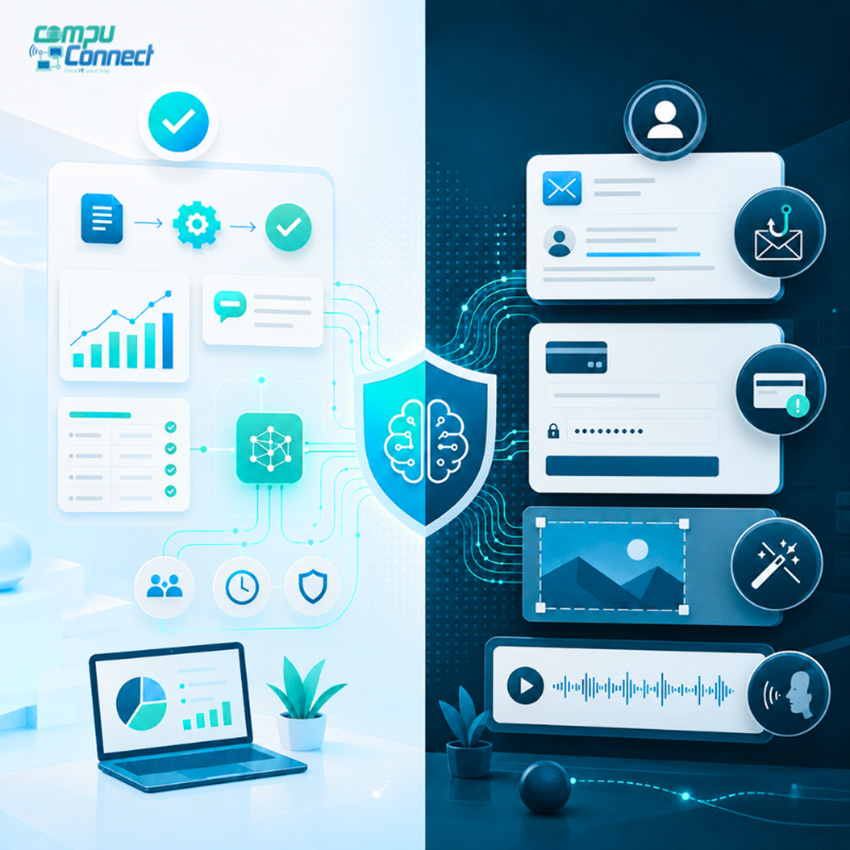
Artificial intelligence can make life easier. It can help businesses work faster, improve communication, and simplify everyday tasks.
But it also comes with consequences.
The same technology that makes things more convenient is now helping scammers create fake images, fake messages, and even fake voice calls that look and sound real. And the people most likely to fall for these scams are often the most vulnerable and the least informed.
That is why this matters right now.
Scammers are using AI to create fake charity events, fake subscription pages, fake billing alerts, and fake customer service messages designed to collect personal information, banking credentials, or credit card details. What looks like a normal payment page or sign-up form may actually be a trap.
Why These Scams Are Harder to Spot
In the past, scams were often easier to recognize. The email looked sloppy. The website felt suspicious. The call sounded fake.
Now, AI can help scammers create:
- polished promotional images
- realistic emails and text messages
- professional-looking websites
- convincing sign-up and payment pages
- voice impersonations that sound believable
That means people can no longer assume something is safe just because it looks professional.
Who Is Most at Risk
These scams often target people who are less familiar with digital threats, more likely to trust urgency, or simply unaware of how realistic AI-generated fraud has become.
That can include:
- people who are not used to spotting online scams
- busy consumers who respond quickly under pressure
- individuals dealing with stress or distraction
- anyone who has not been educated on what to look for
This is not about intelligence. It is about awareness.
What These Scams Often Look Like
Some of the most common examples include:
Fake Charity Events
A donation page or fundraiser looks legitimate, but the money goes straight to a scammer.
Fake Subscriptions or Renewals
A person is asked to log in, reactivate an account, or enter payment details on a fake website.
Fake Billing or Customer Service Alerts
An urgent message claims there is a problem with an account or payment and pushes the victim to act quickly.
Voice Impersonation Scams
A caller sounds like a real representative, colleague, or trusted contact and asks for payment, codes, or personal details.
How the Public Can Avoid Falling for Them
A few habits can make a big difference:
- slow down when a message feels urgent
- do not trust something just because it looks polished
- never click payment or login links without verifying them
- be cautious with requests for banking or credit card information
- verify charities and events through official channels
- confirm suspicious requests through a second method
The goal is simple: pause before you act.
Why Business Owners Should Speak Up
This is not just a public issue. It is a client-awareness issue too.
Your customers may already be seeing fake promotions, fake payment links, fake donation requests, or impersonation attempts tied to brands and services they recognize. In some cases, scammers may even imitate real businesses.
That is why business owners should actively remind clients:
- not to trust urgent payment requests
- not to enter financial details into emailed or texted links
- to verify donation requests independently
- to call the business directly when something feels off
Clear reminders build trust and help protect the people who rely on you.
How CompuConnect Helps
At CompuConnect, we help businesses take a more proactive approach to cybersecurity, communication, and client trust.
We help organizations strengthen their IT environment, improve security, and reduce the chances of becoming easy targets. We also help businesses think about how to better educate clients and staff so fewer people fall victim to modern scams.
For businesses across Brooklyn, Manhattan, New York City, Brick, South Jersey, and the Tri-State Area, that means having a managed IT and cybersecurity partner focused on stability, visibility, and real human support.
AI can absolutely make life easier, but it can also make scams more convincing.
Fake images, fake messages, and fake voice calls are becoming more realistic, and the people most at risk are often the vulnerable and the uninformed. That is why awareness matters so much.
For the public, the best defense is to slow down, verify, and think twice before sharing information or making payments.
For business owners, now is the time to keep clients informed and make sure your business is not an easy target either.
Want to better protect your business and the people who trust you? Schedule a discovery call with us to talk about practical ways to strengthen your cybersecurity foundation and reduce avoidable risk.
About the Author
 Yiddy Lemmer is the Founder and CEO of CompuConnect IT, a leading IT support and cybersecurity firm serving small and midsize businesses across New York and New Jersey. With over 18 years of hands-on experience, multiple Microsoft and CompTIA certifications, and deep roots in Brooklyn, Yiddy leads with a passion for technology, service excellence, and helping businesses thrive through secure and efficient IT systems.