

About the Author
 Yiddy Lemmer is the Founder and CEO of CompuConnect IT, a leading IT support and cybersecurity firm serving small and midsize businesses across New York and New Jersey. With over 18 years of hands-on experience, multiple Microsoft and CompTIA certifications, and deep roots in Brooklyn, Yiddy leads with a passion for technology, service excellence, and helping businesses thrive through secure and efficient IT systems.
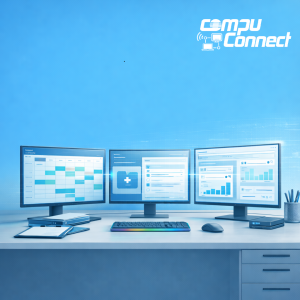
Downtime in a home healthcare agency does not just create an inconvenience. It slows down scheduling, delays billing, frustrates office staff, and can affect the entire pace of operations. Most agencies do not think about downtime until something stops working. A scheduling platform lags in the middle of a busy day. Billing gets delayed because a system is down or not syncing properly. Administrative staff lose access to the tools they rely on to keep everything moving. By that point, the focus turns to getting things back online as quickly as possible. What we see at CompuConnect, though, is that downtime usually does not come out of nowhere. It tends to build over time through small issues that are easy to overlook until they start affecting the whole operation.
For home healthcare agencies in Brooklyn, Manhattan, New York City, Brick, and South Jersey, the systems that matter most are often the ones under the most pressure. Scheduling has to stay accurate and accessible. Billing has to move without delays. Administrative systems need to be reliable for staff working in the office, remotely, or across locations. When those systems begin to slow down, fall out of sync, or require constant workarounds, the agency starts losing time in ways that add up quickly. A delayed update here or a billing issue there may seem manageable on its own, but over time it creates operational drag that affects productivity, cash flow, and confidence in the system itself.
In many cases, the cause is not one major failure. It is a lack of consistent IT management behind the scenes. Systems are not monitored closely enough. Updates are delayed. Different platforms are being used without anyone keeping an eye on how they interact. Remote access is in place, but not always optimized for performance or reliability. Agencies are left reacting to issues instead of staying ahead of them. That is where CompuConnect is especially valuable. We are strong in environments where businesses depend on multiple day-to-day systems working smoothly together, and where downtime affects real operations, not just IT. For home healthcare agencies, that means we help keep scheduling, billing, and administrative systems stable, supported, and predictable so your staff can stay focused on their work instead of fighting with technology.
What CompuConnect does best is proactive support. We do not wait for things to break before paying attention. We monitor systems continuously, keep devices and software updated, support secure and reliable access for office and remote staff, and identify gaps before they turn into disruptions. We also help agencies plan ahead so upgrades, replacements, and improvements do not happen at the worst possible time. For home healthcare agencies in New York City, Brooklyn, Manhattan, Brick, and South Jersey, that local, hands-on approach matters. When you rely on scheduling systems, billing workflows, and administrative access every day, you need more than someone who answers a ticket after the fact. You need an IT partner that understands how these systems affect the rhythm of your business and helps keep everything running quietly in the background.
Downtime also has a cost beyond the obvious technical issue. When scheduling is inconsistent, communication gets harder. When billing is delayed, revenue gets delayed. When admin systems are unreliable, staff end up creating manual workarounds that take more time and increase frustration. In a regulated environment like home healthcare, those issues can also create compliance concerns if systems are not being maintained properly. This is another area where CompuConnect helps. We do not just respond to issues. We help agencies reduce risk by keeping systems updated, accessible, and better aligned with how the business actually operates. That kind of consistency is what helps reduce downtime over time.
For most agencies, reducing downtime is not about replacing everything at once. It is about getting the right support in place so the systems you already depend on are being monitored, maintained, and managed properly. That is exactly where CompuConnect comes in. We help home healthcare agencies across Brooklyn, Manhattan, New York City, Brick, and South Jersey create a more stable IT environment with fewer surprises, less disruption, and more confidence in the systems they rely on every day.
If your agency has been dealing with recurring slowdowns, billing delays, scheduling issues, or administrative system problems, it may be time to take a closer look at how your IT is being managed. Schedule a discovery call with CompuConnect and let’s talk through what is happening, where the friction is, and how to make your systems more reliable.
About the Author
Yiddy Lemmer is the Founder and CEO of CompuConnect IT, a leading IT support and cybersecurity firm serving small and midsize businesses across New York and New Jersey. With over 18 years of hands-on experience, multiple Microsoft and CompTIA certifications, and deep roots in Brooklyn, Yiddy leads with a passion for technology, service excellence, and helping businesses thrive through secure and efficient IT systems.