


By Yiddy Lemmer, CEO – CompuConnect, Inc.
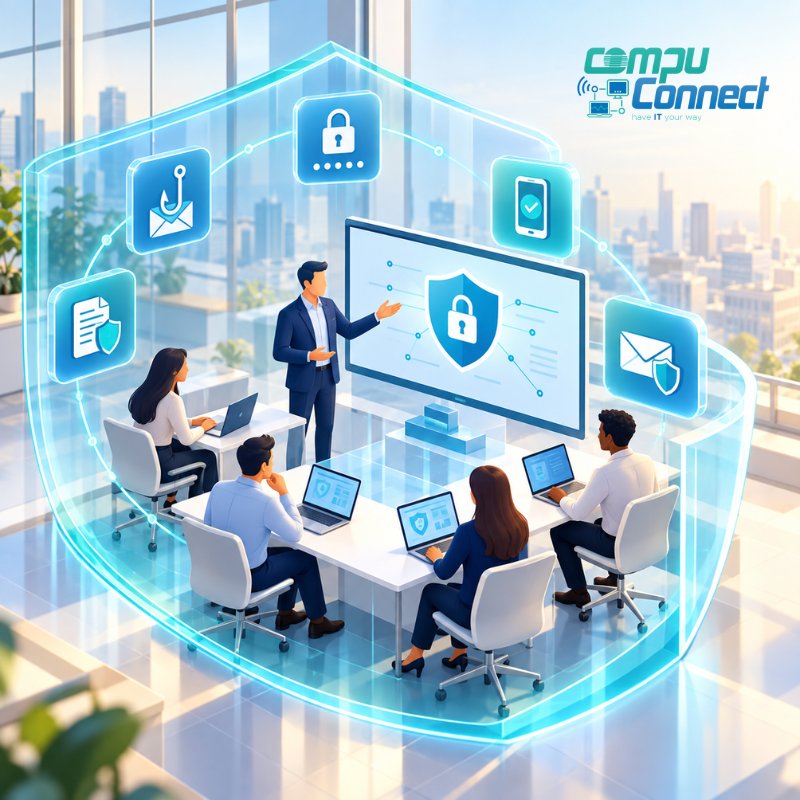
Employee cybersecurity training matters because many business security risks begin with everyday decisions: clicking a link, opening an attachment, responding to a vendor request, approving a payment change, entering a password, or sharing information through the wrong channel.
Even with strong cybersecurity tools in place, employees still play a major role in protecting the business. They are often the first to see suspicious emails, unexpected login prompts, fake vendor messages, unusual file requests, and other signs that something may not be right.
The goal of cybersecurity awareness training is not to turn employees into IT experts. It is to help them build better habits, recognize common risks, pause before acting, and know who to contact when something feels suspicious.
For businesses in Brooklyn, Manhattan, New York City, Brick, South Jersey, and across the Tri-State Area, employee cybersecurity training is an important part of protecting productivity, sensitive data, client trust, compliance readiness, and business continuity.
What Is Employee Cybersecurity Training?
Employee cybersecurity training teaches staff how to recognize and respond to common security risks that appear during daily work.
That may include:
- Suspicious emails
- Phishing attempts
- Fake login pages
- Password risks
- Unsafe file sharing
- Business Email Compromise
- Social engineering
- Vendor payment fraud
- Unusual attachment requests
- Multi-factor authentication prompts
- Safe use of cloud applications
- Reporting suspicious activity
The best training is practical. It connects cybersecurity to the work employees actually do every day, not abstract technical concepts.
A finance employee may need to recognize fake payment change requests.
An office manager may need to verify vendor emails.
A healthcare administrator may need to protect sensitive records.
A CPA team member may need to understand secure client file handling.
A remote employee may need to know how to safely access company systems outside the office.
Cybersecurity training works best when it is clear, relevant, and easy to apply.
Why Employees Are a Critical Part of Cybersecurity
Cybersecurity tools are important, but technology alone cannot stop every risk.
Attackers often target people because employees are involved in the daily workflows that keep the business moving. They read emails, process requests, access files, communicate with vendors, use cloud apps, and handle sensitive information.
A suspicious message may not look dramatic. It may look like a normal request from a client, vendor, executive, coworker, or software platform.
That is why employee awareness matters.
Your team needs to know when to slow down and ask:
- Was I expecting this email?
- Is this request normal?
- Does the sender address look right?
- Is someone asking me to bypass a process?
- Is there unusual urgency?
- Am I being asked to share sensitive information?
- Should I verify this through another channel?
Strong cybersecurity habits help employees make safer decisions before a small action becomes a larger business problem.
Common Risks Employees Need to Recognize
Employee cybersecurity training should focus on the risks staff are most likely to encounter during normal work.
Phishing Emails
Phishing emails are designed to trick employees into clicking a link, opening an attachment, entering credentials, or sharing information.
These messages may appear to come from familiar sources, including banks, Microsoft 365, vendors, delivery services, executives, or coworkers.
Training helps employees recognize suspicious details, avoid risky clicks, and report concerns quickly.
Fake Login Pages
A common tactic is to send employees to a fake login page that looks like a real cloud application, email portal, or file-sharing platform.
Once an employee enters their username and password, attackers may attempt to access email, files, contacts, calendars, and other business systems.
Training helps staff understand that login prompts should be treated carefully, especially when they come from unexpected links.
Business Email Compromise
Business Email Compromise happens when attackers impersonate someone the employee trusts. They may pose as a business owner, executive, vendor, payroll provider, client, or coworker.
The request may involve a wire transfer, gift cards, banking change, payroll update, invoice payment, or confidential information.
Training helps employees verify unusual requests before taking action.
Password and MFA Fatigue
Employees need to understand why strong passwords and multi-factor authentication matter.
They should also know how to respond to unexpected MFA prompts. An unexpected prompt may mean someone else is trying to access their account.
Training helps staff avoid approving access without thinking.
Unsafe File Sharing
Employees often share documents through email, cloud folders, collaboration tools, or client portals.
Without clear guidance, sensitive information may be shared with the wrong person, stored in the wrong location, or left accessible longer than necessary.
Training helps staff understand secure file handling and access control.
Social Engineering
Social engineering is when someone manipulates a person into taking an action or sharing information.
It can happen through email, phone calls, text messages, chat tools, or vendor communication.
Training helps employees recognize pressure, urgency, secrecy, and unusual requests.
How Cybersecurity Training Protects the Business
Employee cybersecurity training is not just an IT task. It supports the entire business.
It Reduces Avoidable Risk
Many incidents begin with simple mistakes. A click, download, reply, approval, or password entry can create exposure.
Training reduces risk by helping employees recognize suspicious activity before they act.
It Protects Sensitive Information
Businesses handle client data, employee records, financial information, login credentials, internal documents, and operational files.
Employees who understand secure handling are less likely to expose sensitive information accidentally.
It Supports Compliance Readiness
Many industries have compliance expectations around data protection, access control, security policies, and employee awareness.
Training helps reinforce a culture of security and supports stronger documentation around cybersecurity practices.
It Improves Response Time
When employees know what to report and who to contact, suspicious activity can be reviewed faster.
Early reporting can help contain issues before they spread across systems, email accounts, files, or business workflows.
It Strengthens Business Continuity
Cybersecurity incidents can interrupt operations. Email compromise, account lockouts, malware, data loss, or unauthorized access can slow the team down.
Training helps reduce the chance that a preventable incident disrupts productivity.
It Builds Confidence Across the Team
Employees should not feel like they are guessing.
Good training gives staff a clear process: pause, verify, report, and ask for help.
That confidence matters, especially during busy days when people are moving quickly.
What Good Cybersecurity Training Should Include
Effective cybersecurity awareness training should be practical, repeatable, and connected to the way the business actually operates.
Realistic Examples
Training should show examples employees may actually see, such as fake invoice emails, unusual login prompts, vendor payment changes, suspicious attachments, or requests from someone pretending to be leadership.
Clear Reporting Procedures
Employees should know exactly what to do when something looks suspicious.
Who should they contact?
How should they report an email?
What should they avoid clicking?
What happens after they report it?
A clear process helps staff act quickly and calmly.
Role-Based Guidance
Not every employee faces the same risks.
Finance teams may need more training around payment fraud.
Administrative teams may need more training around vendor requests and file sharing.
Leadership may need more training around impersonation attempts.
Remote workers may need more training around secure access.
Training is more effective when it reflects real responsibilities.
Multi-Factor Authentication Awareness
Employees should understand how MFA protects accounts and what to do when an MFA prompt appears unexpectedly.
They should know that approving a prompt without initiating a login can create risk.
Password and Access Best Practices
Training should reinforce password hygiene, secure password managers, unique passwords, account protection, and the importance of not sharing credentials.
Secure File Handling
Employees should know where files belong, how to share them securely, who should have access, and when permissions should be reviewed.
Ongoing Reinforcement
One-time training is not enough. Employees need reminders, refreshers, examples, and regular conversations so security habits stay current.
Cybersecurity awareness should become part of the culture, not an annual checkbox.
Why Training Alone Is Not Enough
Employee cybersecurity training is important, but it should not stand alone.
Training works best when it is supported by the right technology, policies, and live support.
A strong cybersecurity strategy should also include:
- Multi-factor authentication
- Email security
- Endpoint protection
- Microsoft 365 security
- Access controls
- Secure backups
- Password management
- Cloud application oversight
- Monitoring and alerts
- Incident response planning
- Responsive IT support
Employees should not carry the entire weight of cybersecurity. They need secure systems, clear rules, and fast access to help when something seems wrong.
How CompuConnect Helps Businesses Build Stronger Cybersecurity Habits
CompuConnect helps businesses take a proactive, practical approach to cybersecurity awareness and employee support.
That means looking at both the human side and the technical side of cybersecurity. Training matters, but so do secure systems, managed access, email protection, endpoint security, Microsoft 365 configuration, backups, and response planning.
CompuConnect helps businesses:
- Strengthen employee cybersecurity awareness
- Improve email and phishing protection
- Secure Microsoft 365 environments
- Review MFA and access controls
- Protect endpoints and cloud systems
- Support secure file sharing
- Review backup and recovery readiness
- Create clearer reporting procedures
- Provide 100% live human support when staff need help
The goal is to help employees make better decisions without leaving them on their own.
When someone receives a suspicious email, sees an unusual login prompt, or has a concern about a request, they should be able to reach real people who can help quickly. That is where CompuConnect's 100% live human support matters.
Signs Your Team May Need Better Cybersecurity Training
Your business may benefit from stronger employee cybersecurity training if:
- Staff are unsure how to report suspicious emails
- Employees frequently click links without verifying them
- Payment changes are handled mostly by email
- MFA prompts are approved without review
- Passwords are reused or shared
- Remote access procedures are unclear
- Sensitive files are stored across too many places
- Vendor requests are not verified through a trusted process
- Employees are unsure which tools are approved
- Leadership does not have a clear incident response process
These gaps are common, but they should not be ignored.
The best time to strengthen employee awareness is before a mistake creates a larger issue.
Frequently Asked Questions About Employee Cybersecurity Training
Why does employee cybersecurity training matter?
Employee cybersecurity training matters because many cyber risks appear through everyday work: emails, login prompts, file sharing, vendor requests, payment changes, and cloud access. Training helps employees recognize risks and respond safely.
What should cybersecurity training teach employees?
Cybersecurity training should teach employees how to recognize phishing, verify unusual requests, protect passwords, use MFA properly, share files securely, report suspicious activity, and avoid risky links or attachments.
How often should employees receive cybersecurity training?
Employees should receive cybersecurity training regularly, not just once a year. Ongoing reminders, refreshers, examples, and updates help security habits stay current.
Is cybersecurity training enough to protect a business?
No. Training is important, but it should be combined with security tools, MFA, email protection, endpoint security, backups, access controls, monitoring, and responsive IT support.
Who needs cybersecurity training?
Everyone who uses business technology should receive training, including leadership, administrative staff, finance teams, remote employees, operations staff, and anyone who accesses email, files, cloud apps, or sensitive information.
The Practical Next Step
Employee cybersecurity training matters because your people are part of your security strategy.
They handle the emails, files, requests, logins, approvals, and communication that keep the business running. With the right training, tools, and support, they can make safer decisions and reduce avoidable risk.
CompuConnect helps businesses in Brooklyn, Manhattan, New York City, Brick, South Jersey, and across the Tri-State Area strengthen cybersecurity awareness, secure Microsoft 365, improve email protection, protect data, and support employees with 100% live human IT support.
Ready to build stronger cybersecurity habits across your team? Schedule a discovery call with CompuConnect to review your current cybersecurity posture and identify practical next steps.
About the Author
 Yiddy Lemmer is the Founder and CEO of CompuConnect IT, a leading IT support and cybersecurity firm serving small and midsize businesses across New York and New Jersey. With over 18 years of hands-on experience, multiple Microsoft and CompTIA certifications, and deep roots in Brooklyn, Yiddy leads with a passion for technology, service excellence, and helping businesses thrive through secure and efficient IT systems.