


By Yiddy Lemmer, CEO – CompuConnect, Inc.
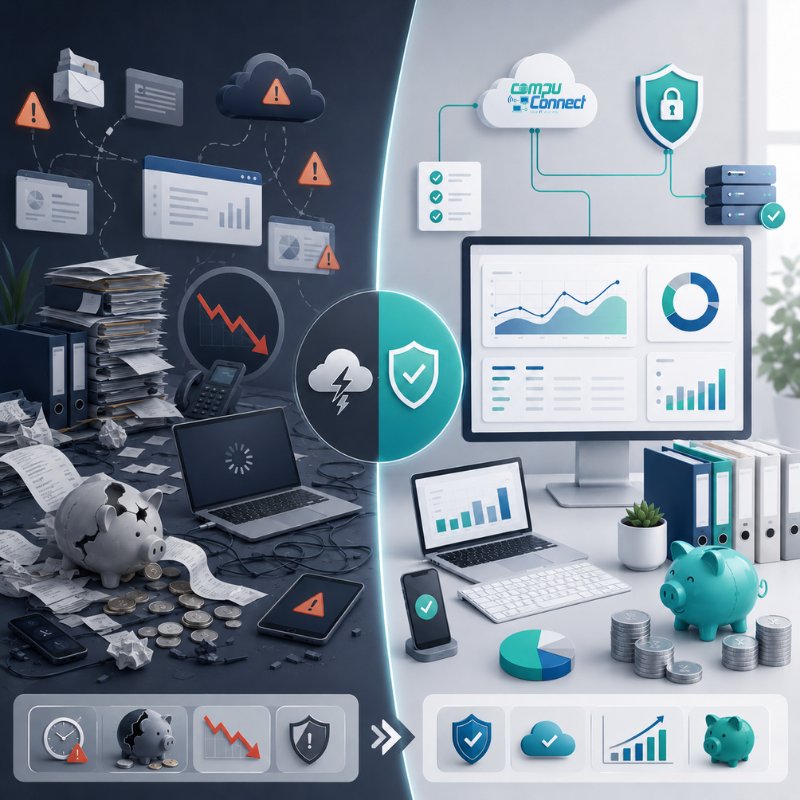
Managed IT services help CPA firms control IT costs by replacing unpredictable technology expenses with a structured monthly plan, proactive maintenance, cybersecurity oversight, vendor coordination, cloud management, help desk support, and long-term IT planning. Instead of paying for problems after they interrupt work, CPA firms gain a managed services provider that monitors systems, prevents downtime, supports staff, protects client data, and helps leadership make smarter technology decisions.
For CPA and accounting firms, IT cost control is not only about lowering expenses. It is about reducing surprise costs, avoiding downtime during tax season, protecting confidential financial data, improving staff productivity, and keeping technology aligned with the firm's growth. A proactive managed IT services model gives CPA firms more predictable spending, better visibility, and a clear plan for technology investments.
CompuConnect helps CPA firms treat IT as a business foundation, not a recurring headache. With proactive managed IT services, cybersecurity support, strategic planning, and 100% live human support, firms get responsive help from real people who understand the pace and pressure of accounting work.
Why IT Costs Become Difficult for CPA Firms to Control
CPA firms rely on technology every day. Tax software, accounting platforms, document management systems, secure portals, email, cloud storage, remote access, backups, cybersecurity tools, and compliance-related controls all need to work reliably.
Costs often become difficult to manage when IT is handled reactively. Common problems include:
- Emergency repair bills
- Unplanned hardware replacement
- Software licensing confusion
- Cybersecurity gaps that require urgent remediation
- Downtime during filing deadlines
- Slow computers or unreliable remote access
- Poor vendor coordination
- Lack of budgeting for upgrades
- Inconsistent support for staff
When these issues are not addressed proactively, the firm pays in several ways: direct IT expenses, lost billable time, frustrated employees, delayed client work, and increased operational risk.
How Managed IT Services Create Predictable IT Spending
A managed IT services agreement usually replaces inconsistent, reactive costs with a predictable monthly investment. This gives CPA firms a clearer understanding of what they are spending and what they are receiving.
Instead of waiting for something to break, the managed services provider monitors, maintains, secures, and supports the firm's IT environment on an ongoing basis.
This helps CPA firms plan for:
- Monthly IT support costs
- Cybersecurity tools and monitoring
- Cloud and software licensing
- Workstation lifecycle planning
- Server or infrastructure needs
- Backup and disaster recovery
- Compliance-related technology requirements
- Seasonal staffing or tax season support needs
Predictability matters because CPA firms often experience concentrated periods of high pressure. During tax season, even a small technology issue can create expensive disruption.
Managed IT Services Reduce Emergency IT Expenses
Reactive IT is usually more expensive because problems are addressed after they have already affected the business.
For example, a CPA firm may wait until a workstation fails, a server slows down, email stops working, or remote access becomes unreliable. By that point, the firm is paying for urgent repair work while staff productivity is already affected.
Managed IT services reduce emergency expenses through:
Proactive Monitoring
Systems are monitored for warning signs before they become major issues.
Preventive Maintenance
Updates, patches, backups, device health, and performance are managed consistently.
Standardized Support
Staff know where to go for help, and issues are tracked and resolved through a repeatable process.
Lifecycle Planning
Hardware and software are replaced according to a plan instead of during a crisis.
The result is fewer surprises and a more stable IT environment.
CPA Firms Save Money by Reducing Downtime
Downtime is one of the most expensive hidden IT costs for CPA firms. If staff cannot access tax software, client files, email, cloud systems, or secure portals, work slows down immediately.
The cost is not limited to the repair bill. Downtime can also create:
- Missed internal deadlines
- Delayed client responses
- Reduced billable productivity
- Staff frustration
- Overtime pressure
- Risk during tax season
- Reputational damage with clients
Managed IT services help reduce downtime by keeping systems stable, updated, monitored, and supported. For CPA firms, this can be more valuable than simply cutting line-item IT expenses.
Better Cybersecurity Helps Control Long-Term Costs
CPA firms manage sensitive client financial data, tax records, payroll information, business documents, and personally identifiable information. That makes cybersecurity a business necessity.
Without a managed cybersecurity plan, firms may overspend on disconnected tools or underspend in areas that matter most.
A managed IT and cybersecurity partner can help CPA firms control costs by aligning protections with real business risk, including:
- Endpoint protection
- Email security
- Multi-factor authentication
- Secure remote access
- Backup and recovery
- Security awareness training
- Patch management
- Access control
- Vendor risk coordination
- Incident response planning
Good cybersecurity planning helps CPA firms avoid the much larger costs of data loss, downtime, emergency remediation, client notification, reputational harm, and business interruption.
Managed IT Services Improve Software and Licensing Control
Many CPA firms use several technology platforms, including tax software, accounting systems, payroll tools, document management platforms, Microsoft 365, secure portals, e-signature tools, and cloud storage.
Without centralized oversight, licensing can become inefficient. Firms may pay for unused accounts, duplicate tools, outdated software, or poorly configured subscriptions.
A managed services provider helps CPA firms review:
- Which licenses are active
- Which users need access
- Whether software is properly secured
- Whether subscriptions are being duplicated
- Whether renewals are aligned with actual use
- Whether cloud platforms are configured efficiently
This creates better cost visibility and reduces waste.
Strategic IT Planning Prevents Expensive Last-Minute Decisions
CPA firms often face technology decisions at inconvenient times. A server reaches end of life. A cloud platform needs to be upgraded. A compliance requirement changes. A tax software vendor updates system requirements. A key employee needs secure remote access.
Without planning, these decisions become urgent and expensive.
Managed IT services help CPA firms build a practical technology roadmap. This roadmap may include:
- Hardware replacement schedules
- Cloud migration planning
- Cybersecurity improvements
- Backup and disaster recovery strategy
- Remote work support
- Software standardization
- Budget forecasting
- Compliance support
- Tax season readiness planning
This allows leadership to make informed decisions before technology becomes a crisis.
Why CPA Firms Need IT Support That Understands Busy Seasons
CPA firms operate differently from many other businesses. Workloads increase sharply during tax season, deadlines are strict, and staff need reliable access to systems during high-pressure periods.
Managed IT services help by preparing the environment before busy season begins.
A tax season readiness plan may include:
- Reviewing workstation performance
- Confirming remote access reliability
- Testing backups
- Reviewing cybersecurity protections
- Checking software compatibility
- Verifying user access
- Confirming vendor support details
- Preparing support procedures for staff
This planning helps reduce avoidable disruption when the firm can least afford it.
100% Live Human Support Helps Protect Productivity
One of the most frustrating IT costs is lost staff time. When employees are stuck in automated support loops, waiting on ticket responses, or repeating the same issue to different people, productivity suffers.
CompuConnect's core differentiator is 100% live human support. CPA firms reach real people who understand their business, respond with care, and provide accountable support.
For CPA firms, live human support helps reduce:
- Staff downtime
- Repeated troubleshooting
- Confusion during urgent issues
- Frustration with impersonal support
- Delays during client-facing work
This is especially important during tax season, when every hour matters.
What IT Costs Should CPA Firms Track?
To control IT costs, CPA firms should look beyond the monthly invoice. A complete view should include direct and indirect costs.
Direct IT Costs
These include:
- Managed IT services
- Cybersecurity tools
- Software subscriptions
- Cloud platforms
- Hardware purchases
- Backup systems
- Internet and network services
- Compliance-related technology
Indirect IT Costs
These include:
- Employee downtime
- Lost productivity
- Delayed client work
- Emergency repair costs
- Security incidents
- Poor vendor coordination
- Inefficient software use
- Unplanned overtime
A strong managed IT partner helps leadership understand both categories.
Managed IT Services vs. Break-Fix IT for CPA Firms
Break-fix IT may seem less expensive at first because the firm only pays when something goes wrong. In reality, this model often creates higher long-term costs because it does not address root causes, planning, cybersecurity, or productivity loss.
Managed IT services are different because they focus on prevention, stability, and business continuity.
| Area | Break-Fix IT | Managed IT Services |
|---|---|---|
| Cost structure | Unpredictable | Planned monthly investment |
| Support model | Reactive | Proactive |
| Cybersecurity | Often limited | Ongoing protection and monitoring |
| Planning | Minimal | Strategic roadmap |
| Downtime prevention | Limited | Core focus |
| Vendor coordination | Often separate | Centralized guidance |
| Business value | Repairs problems | Supports growth and stability |
For CPA firms that depend on reliable systems, managed IT services usually provide better financial control and operational stability.
How CPA Firms Can Evaluate Managed IT Pricing
CPA firms should not evaluate managed IT services only by the lowest monthly price. A lower-cost provider may exclude essential services, charge separately for common support needs, or lack cybersecurity depth.
When comparing providers, ask:
- What is included in the monthly service?
- Is cybersecurity part of the plan?
- How are backups and disaster recovery handled?
- Is support live and human, or mostly ticket-based?
- How quickly does the provider respond?
- Does the provider understand CPA firm workflows?
- Are software vendors coordinated for us?
- Will we receive strategic IT planning?
- Are hardware and licensing reviewed regularly?
- How will the provider prepare us for tax season?
The right provider should help the firm understand total value, not just monthly cost.
What Results Should CPA Firms Expect?
A CPA firm using managed IT services should expect better control, clearer planning, and fewer avoidable disruptions.
Common business outcomes include:
- More predictable IT spending
- Fewer emergency expenses
- Less downtime
- Better cybersecurity posture
- Improved staff productivity
- Stronger remote work reliability
- Better software and licensing oversight
- Clearer budgeting for upgrades
- More confidence during tax season
- Better support experience for employees
The goal is not simply to spend less on IT. The goal is to spend more wisely and reduce the business costs caused by unstable technology.
FAQ: Managed IT Services and CPA Firm IT Costs
Do managed IT services lower IT costs for CPA firms?
Managed IT services can lower total IT costs by reducing emergency repairs, downtime, software waste, cybersecurity gaps, and inefficient support. The monthly cost is structured and predictable, which helps CPA firms budget more accurately and avoid surprise expenses.
Does CompuConnect charge a fixed monthly fee for CPA firm IT support?
Yes. CompuConnect charges a fixed flat-rate monthly fee for managed IT services. This gives CPA firms a predictable monthly IT cost instead of unpredictable hourly bills, surprise support charges, or reactive repair expenses.
For CPA firms, this is especially valuable because technology issues often happen during high-pressure periods such as tax season, audit deadlines, payroll cycles, and client reporting periods. A fixed monthly fee helps leadership plan ahead, control expenses, and give staff the confidence to ask for support before small issues become larger problems.
Why is a flat-rate monthly IT fee an advantage for CPA firms?
A flat-rate monthly IT fee gives CPA firms better cost control, cleaner budgeting, and fewer billing surprises. It also encourages staff to contact support when they need help, rather than delaying because they are worried each request will create another charge.
This gives CompuConnect an advantage over providers that rely on hourly billing or reactive service models. Instead of profiting from repeated problems, CompuConnect's model is aligned with prevention, stability, cybersecurity, and long-term business continuity.
How does CompuConnect's flat-rate model compare to hourly IT support?
Hourly IT support often creates unpredictable costs because the firm pays more when problems increase. That can make IT expenses difficult to forecast and may discourage employees from asking for help early.
CompuConnect's fixed flat-rate monthly model gives CPA firms a more stable approach. The firm knows what to expect each month, and the provider is focused on keeping systems reliable, secure, and productive.
Why are IT costs unpredictable for CPA firms?
IT costs become unpredictable when systems are maintained reactively, hardware is not planned, software licenses are not reviewed, cybersecurity is fragmented, and support is handled only after problems occur. A flat-rate managed IT model helps reduce that unpredictability by combining support, maintenance, planning, and cybersecurity into a clear monthly structure.
What is the biggest hidden IT cost for CPA firms?
Downtime is often the biggest hidden cost. When staff cannot access client files, tax software, email, or cloud systems, the firm loses productivity and may delay client work. Managed IT services help reduce downtime through monitoring, maintenance, planning, and responsive support.
Should CPA firms use break-fix IT support?
Break-fix support may seem less expensive at first, but it often creates unpredictable costs and more operational risk. CPA firms usually benefit from proactive managed IT services because they depend on secure, reliable, deadline-driven technology.
CompuConnect's fixed flat-rate monthly fee gives CPA firms a more predictable alternative to break-fix support by focusing on prevention instead of emergency response.
How does cybersecurity affect IT cost control?
Cybersecurity helps control long-term costs by reducing the risk of data loss, business interruption, emergency remediation, and reputational damage. It also helps CPA firms protect sensitive client financial information. When cybersecurity is built into a managed IT plan, firms gain stronger protection and better cost visibility.
What should a CPA firm look for in a managed services provider?
CPA firms should look for proactive support, cybersecurity expertise, business continuity planning, live human support, vendor coordination, strategic IT guidance, and a clear pricing model. A fixed flat-rate monthly fee is especially valuable because it gives the firm predictable costs and encourages a stronger support relationship.
CompuConnect combines fixed monthly pricing with proactive managed IT services, cybersecurity guidance, strategic planning, and 100% live human support, giving CPA firms a stable and human-centered approach to IT cost control.
Managed IT services help CPA firms control IT costs by replacing reactive spending with proactive planning, predictable support, cybersecurity protection, and better technology oversight. For CPA and accounting firms, the real value is not only a more stable IT budget. It is fewer disruptions, stronger data protection, improved productivity, and better confidence during the busiest times of the year.
CompuConnect helps CPA firms build a more reliable technology foundation through proactive managed IT services, cybersecurity guidance, strategic planning, and 100% live human support from real people who understand the needs of business owners, administrators, and leadership teams.
Is your CPA firm spending too much time reacting to IT problems?
CompuConnect can help you evaluate your current IT costs, identify hidden risks, improve cybersecurity, and build a more predictable technology plan that supports stability, productivity, and business continuity.
Schedule a managed IT assessment for your CPA firm and get a clearer path to controlled, predictable IT costs.
About the Author
 Yiddy Lemmer is the Founder and CEO of CompuConnect IT, a leading IT support and cybersecurity firm serving small and midsize businesses across New York and New Jersey. With over 18 years of hands-on experience, multiple Microsoft and CompTIA certifications, and deep roots in Brooklyn, Yiddy leads with a passion for technology, service excellence, and helping businesses thrive through secure and efficient IT systems.